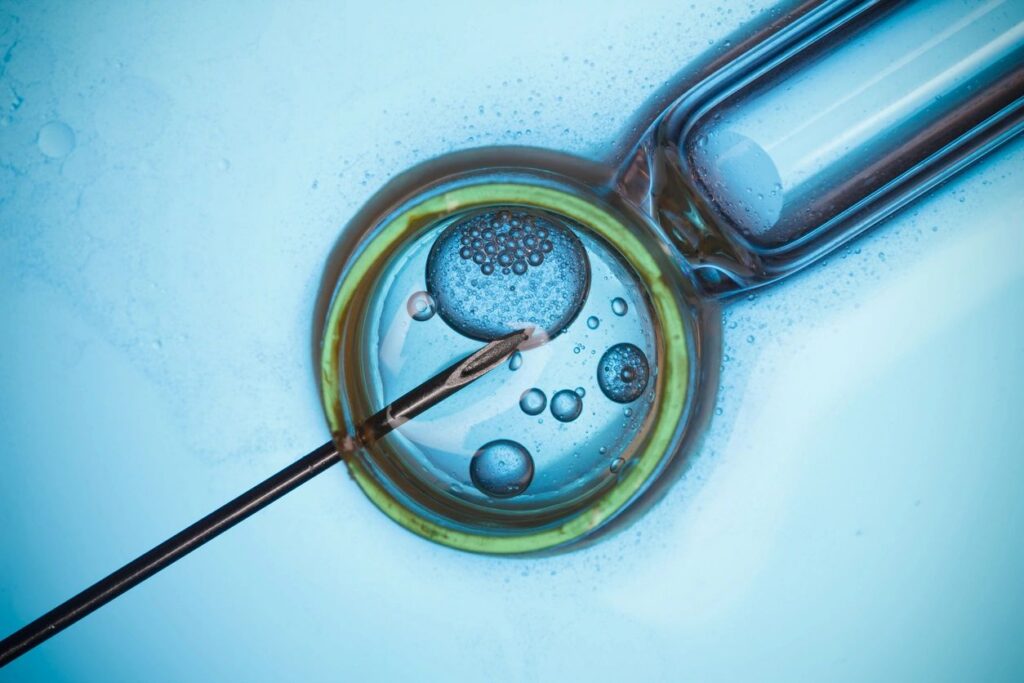
Starting IVF can feel overwhelming, especially when you don’t know what happens at each stage. From the first fertility tests to egg retrieval, embryo development, embryo transfer, and the pregnancy test, IVF involves several carefully planned steps.
The good news is that understanding the process can make the journey easier and less confusing.
In vitro fertilization (IVF) is an assisted reproductive technology in which eggs are collected from the ovaries and fertilized with sperm in a laboratory. The resulting embryo is then transferred into the uterus with the goal of achieving pregnancy.
In this guide, we will explain the IVF process step by step, including what happens to the eggs, sperm, and embryos at each stage.
Important: IVF protocols vary between patients. Your fertility specialist may modify medications, monitoring, trigger timing, fertilization method, embryo transfer timing, or other steps according to your individual medical needs.
What Is IVF?
IVF stands for In Vitro Fertilization.
“In vitro” means that fertilization takes place outside the body, in a laboratory setting.
During a typical IVF cycle:
Fertility evaluation → Ovarian stimulation → Monitoring → Trigger injection → Egg retrieval → Sperm collection → Fertilization → Embryo culture → Embryo transfer → Pregnancy test
Embryo development involves repeated cell divisions after fertilization, eventually leading to the formation of a blastocyst in suitable embryos.
Step 1: Fertility Testing and Initial Consultation
Before starting IVF, the fertility team evaluates both partners.
The purpose is to understand why pregnancy has not occurred and which treatment approach is most appropriate.
Tests for the woman may include:
- Medical and reproductive history
- Menstrual-cycle assessment
- Ultrasound examination
- Ovarian reserve assessment
- AMH testing when clinically appropriate
- Hormonal evaluation when indicated
- Assessment of the uterus and endometrium
- Tubal assessment in selected patients
Tests for the man may include:
- Semen analysis
- Sperm concentration
- Sperm motility
- Sperm morphology
- Additional sperm tests when clinically indicated
The doctor may also review previous pregnancies, miscarriages, surgeries, medical conditions, medications, and previous fertility treatments.
Why is this step important?
IVF should not be treated as a one-size-fits-all procedure.
The fertility team uses the evaluation to develop an individualized treatment plan.
Step 2: Planning the IVF Cycle
Once the initial evaluation is complete, the fertility specialist decides which IVF protocol is appropriate.
The exact protocol can differ according to:
- Age
- Ovarian reserve
- Previous IVF history
- Response to fertility medications
- Risk of ovarian hyperstimulation
- Male-factor infertility
- Other medical factors
Some patients may undergo a fresh embryo transfer, while others may have all suitable embryos frozen for a later frozen embryo transfer.
Step 3: Ovarian Stimulation
In a natural menstrual cycle, usually one dominant follicle develops.
During IVF, fertility medications are used to stimulate the ovaries so that multiple follicles can develop during the same cycle.
The aim is to obtain multiple mature eggs—not simply as many eggs as possible.
Medications may include injectable gonadotropins and other medicines used to control premature ovulation.
The exact medication and dosage are individualized by the fertility specialist.
Step 4: Ultrasound and Hormonal Monitoring
During ovarian stimulation, the ovaries are monitored regularly.
Monitoring commonly involves:
Ultrasound
The fertility specialist checks:
- Number of developing follicles
- Follicle size
- Ovarian response
- Endometrial thickness
Blood tests
Hormonal measurements, particularly estradiol, may be performed when clinically indicated.
The medication dose may be adjusted according to the patient’s response.
Step 5: Trigger Injection
When the follicles have developed sufficiently, the fertility specialist plans the final maturation step.
A trigger medication is administered at a carefully calculated time.
The trigger helps complete the final maturation of the oocytes and prepares them for retrieval.
Timing is extremely important.
Egg retrieval is generally scheduled approximately 34–36 hours after the trigger, depending on the protocol and medication used.
Step 6: Egg Retrieval
Egg retrieval, also called oocyte retrieval, is the procedure used to collect eggs from the ovaries.
It is usually performed under sedation or anesthesia.
Using ultrasound guidance, a specialized needle is passed through the vaginal wall into the ovarian follicles.
The follicular fluid is aspirated and immediately transferred to the embryology laboratory.
This is where the work of the embryologist becomes especially important.
Step 7: What Happens to the Eggs in the IVF Laboratory?
Once the follicular fluid reaches the IVF laboratory, embryologists examine it under a microscope to identify the oocytes.
The eggs are assessed and prepared for fertilization.
Not every follicle necessarily contains an egg, and not every retrieved egg will be mature.
This is why IVF results should not be judged only by the number of follicles seen on ultrasound.
The embryology laboratory provides important information about:
Follicles → Eggs retrieved → Mature eggs → Fertilized eggs → Developing embryos → Suitable embryos for transfer or freezing
Each stage represents a potential reduction in numbers, and this is a normal part of the IVF process.
Step 8: Sperm Collection and Preparation
On the day of egg retrieval, sperm is usually collected from the male partner.
The semen sample is processed in the andrology laboratory.
The laboratory evaluates and prepares sperm according to the treatment plan.
If there is severe male-factor infertility or no sperm in the ejaculate, sperm may sometimes be obtained using a surgical sperm-retrieval procedure.
Step 9: Fertilization — IVF or ICSI
There are two commonly used laboratory approaches.
Conventional IVF
In conventional IVF, prepared sperm and mature eggs are placed together under controlled laboratory conditions so that fertilization can occur naturally.
ICSI
ICSI stands for Intracytoplasmic Sperm Injection.
In ICSI, an embryologist selects an appropriate sperm and injects it directly into a mature egg using a micromanipulation system.
ICSI may be particularly useful in selected cases of male-factor infertility or previous fertilization problems.
It is important to understand that ICSI is not automatically required for every IVF patient.
The fertility specialist and embryology team determine the appropriate fertilization method based on the individual case.
Step 10: Fertilization Check
Approximately the following day, embryologists examine the eggs to determine whether normal fertilization has occurred.
A normally fertilized human oocyte commonly shows two pronuclei (2PN) along with two polar bodies.
This is an important laboratory milestone.
However, fertilization does not guarantee that an embryo will continue developing normally.
Step 11: Embryo Development — Day 1 to Day 5/6
After fertilization, embryos are cultured in specialized incubators under carefully controlled laboratory conditions.
Embryo development generally progresses through several stages.
Day 1 — Fertilized egg
The fertilized oocyte is assessed for normal fertilization.
Day 2 — Cleavage stage
The embryo undergoes cell division.
Day 3 — Cleavage embryo
The embryo continues dividing and may contain several blastomeres.
Day 4 — Morula
The cells undergo compaction and the embryo develops toward the morula stage.
Day 5–6 — Blastocyst
A suitable embryo may develop into a blastocyst, consisting of different cell populations including the inner cell mass and trophectoderm.
Not every embryo reaches the blastocyst stage.
This is an important reason why the number of eggs retrieved cannot be directly equated with the number of embryos available for transfer.
Step 12: Embryo Assessment and Grading
Embryologists evaluate developing embryos using established assessment systems.
For blastocysts, laboratories commonly use grading systems based on:
- Degree of expansion
- Inner cell mass appearance
- Trophectoderm appearance
For example, a blastocyst may be described using a grade such as 4AA, depending on the laboratory’s grading system.
However, embryo grading is a morphological assessment.
A visually good-quality embryo does not guarantee implantation or pregnancy.
Step 13: Fresh or Frozen Embryo Transfer?
After embryo development, the fertility team determines whether an embryo will be transferred in the same cycle or frozen for later use.
Fresh embryo transfer
A suitable embryo is transferred into the uterus during the same treatment cycle.
Frozen embryo transfer
An embryo is cryopreserved, commonly using vitrification, and transferred in a later cycle.
The choice depends on several clinical and laboratory factors.
In some circumstances, freezing all suitable embryos and transferring them later may be recommended.
Step 14: Embryo Transfer
Embryo transfer is usually a relatively short procedure.
A thin catheter is gently passed through the cervix into the uterus.
The selected embryo is then placed inside the uterine cavity.
Unlike egg retrieval, embryo transfer usually does not require anesthesia.
The number of embryos transferred is carefully decided according to the patient’s individual circumstances and applicable clinical guidance.
The goal is generally to achieve a healthy singleton pregnancy while minimizing the risks associated with multiple pregnancy.
Step 15: What Happens After Embryo Transfer?
After transfer, the embryo must implant into the endometrium for pregnancy to develop.
Implantation involves a complex interaction between the developing embryo and the uterine lining.
Patients may experience:
- Mild cramping
- Bloating
- Breast tenderness
- Mild spotting
- No symptoms at all
Symptoms alone cannot confirm whether implantation has occurred.
Many of these symptoms can also result from medications used during the IVF cycle.
Step 16: Progesterone and Other Medications
After embryo transfer, your fertility specialist may prescribe medications such as progesterone to support the luteal phase.
The exact medication, dose, route, and duration depend on the treatment protocol.
Do not stop prescribed medication simply because you experience bleeding or because you feel that the cycle has not worked. Contact your fertility clinic for instructions.
Step 17: Pregnancy Test After IVF
The final step is pregnancy testing.
A serum beta-hCG blood test is commonly used to determine whether pregnancy has occurred.
The timing depends on the clinic’s protocol and the type of embryo transfer performed.
A positive test is an exciting milestone, but it is not the end of the process.
The fertility team may repeat beta-hCG testing and arrange an ultrasound at the appropriate time to assess the pregnancy.
Step 18: First Ultrasound After IVF
If pregnancy is confirmed, your fertility specialist will schedule an ultrasound at the appropriate gestational age.
The ultrasound can help assess:
- Location of the pregnancy
- Gestational sac
- Yolk sac
- Embryonic development
- Cardiac activity when visible at the appropriate stage
The exact timing varies according to the clinical situation.
The IVF Journey in One Simple Flow
Fertility evaluation
↓
IVF treatment planning
↓
Ovarian stimulation
↓
Ultrasound & hormone monitoring
↓
Trigger injection
↓
Egg retrieval
↓
Sperm collection & preparation
↓
IVF/ICSI fertilization
↓
Embryo culture
↓
Embryo assessment
↓
Fresh transfer or embryo freezing
↓
Embryo transfer
↓
Pregnancy test
↓
Ultrasound
↓
Pregnancy care
How Long Does an IVF Cycle Take?
An IVF cycle does not have exactly the same duration for every patient.
The timeline depends on:
- Treatment protocol
- Menstrual cycle
- Ovarian response
- Trigger timing
- Embryo development
- Fresh versus frozen transfer
- Need for additional testing
The stimulation and retrieval portion may take several weeks or less depending on the protocol, while a frozen embryo transfer is performed in a later cycle when indicated.
Your fertility clinic will provide a personalized schedule.
Does IVF Guarantee Pregnancy?
No.
IVF can significantly help couples experiencing infertility, but no fertility treatment can guarantee a pregnancy or live birth.
Success depends on factors such as:
- Female age
- Ovarian reserve
- Egg quality
- Sperm quality
- Embryo development
- Uterine factors
- Underlying infertility diagnosis
- Number and quality of embryos available
- Laboratory and clinical factors
One of the most important factors affecting IVF outcomes is the age of the woman providing the eggs.
Why Do Some Embryos Stop Developing?
This is one of the most common questions patients ask.
Embryo development is a natural selection process.
Some embryos may stop developing because of chromosomal abnormalities or other biological factors. Not every fertilized egg becomes a blastocyst, and not every blastocyst results in implantation.
Therefore, it is normal for the number of embryos to decrease at each stage.
For example:
Eggs retrieved → Mature eggs → Normally fertilized eggs → Cleavage embryos → Blastocysts → Transferable/frozen embryos
This does not necessarily mean that something went wrong in the laboratory.
What Does an Embryologist Do During IVF?
Behind every IVF cycle is a specialized laboratory team.
The clinical embryologist may be involved in:
- Identifying retrieved oocytes
- Assessing oocyte maturity
- Preparing eggs for fertilization
- Performing ICSI when indicated
- Assessing fertilization
- Monitoring embryo development
- Grading embryos
- Performing embryo biopsy when applicable
- Cryopreserving embryos
- Warming vitrified embryos
- Preparing embryos for transfer
The embryology laboratory must maintain highly controlled environmental conditions because embryos are extremely sensitive to changes in temperature, pH, gas concentrations, and other laboratory parameters.
This is why quality control and laboratory standards are an essential part of IVF treatment.
Common Questions About the IVF Process
Is IVF painful?
Some parts of IVF may cause discomfort, particularly ovarian stimulation and bloating. Egg retrieval is generally performed with sedation or anesthesia, so significant pain during the procedure is minimized. Individual experiences vary.
Can I work during IVF?
Many people continue their normal routine during treatment, although your doctor may recommend modifying activities depending on your symptoms and stage of treatment.
How many eggs are needed for IVF?
There is no single ideal number that applies to every patient. The goal is to obtain an appropriate number of mature eggs while minimizing treatment risks.
Is ICSI better than conventional IVF?
Not necessarily. ICSI is an important fertilization technique, but it is not automatically superior for every patient. Its use depends on the clinical and laboratory circumstances.
How many embryos are transferred?
The number depends on factors such as age, embryo stage, treatment history, embryo quality, and applicable clinical guidance. Single embryo transfer is commonly preferred when appropriate because it can reduce the risks associated with multiple pregnancy.
Can embryos be frozen?
Yes. Suitable embryos can be cryopreserved, commonly using vitrification, and potentially used in a future frozen embryo transfer.
When can I take a pregnancy test after IVF?
Your fertility clinic will tell you the appropriate date for beta-hCG testing. Testing too early can sometimes produce confusing results, particularly if a medication containing hCG was used during the cycle.
Final Thoughts
IVF is much more than a single procedure. It is a carefully coordinated journey involving the patient, fertility specialist, nurses, laboratory scientists, embryologists, andrology team, and other healthcare professionals.
From the first fertility evaluation to the development of an embryo in the laboratory and finally to pregnancy testing, every stage has an important role.
Understanding the process can help you approach IVF with realistic expectations and better understand what your medical and embryology team is doing throughout the cycle.
If you are considering IVF, discuss your individual circumstances with a qualified fertility specialist. The right treatment plan is different for every patient.
Your IVF journey begins with one step—and every step is guided by science, care, and hope.
Related Articles From Cell to Soul
Start Here:
- What Is IVF? A Complete Beginner’s Guide
- Who Needs IVF? 10 Medical Reasons Your Doctor May Recommend IVF
Next:
- IVF Success Rate by Age
- IVF Cost in India
- Egg Retrieval in IVF: What Happens During the Procedure?
- Embryo Development Day 1 to Day 5
- Embryo Grading: Understanding Day 5 Blastocyst Grades
- Fresh vs Frozen Embryo Transfer
- What Happens After Embryo Transfer?
- IVF Failure: Common Reasons and What Happens Next
Medical Disclaimer
This article is intended for educational purposes only and should not replace personalized medical advice. IVF protocols, medications, procedures, and treatment decisions vary between individuals.